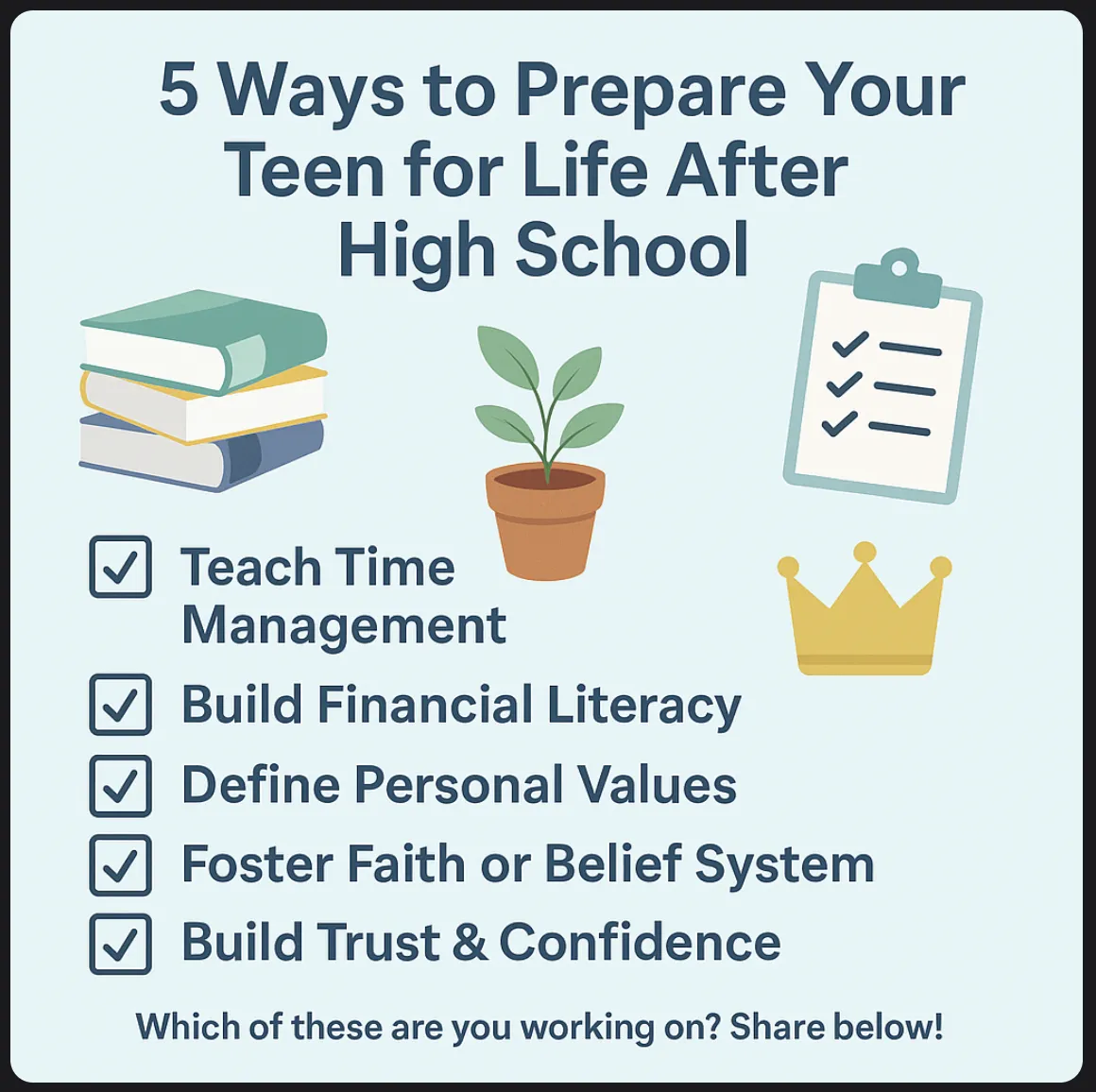
5 Ways I’m Preparing My Teen for Real Life After High School
5 Ways I’m Preparing My Teen for Real Life After High School
As parents, one of our greatest responsibilities is equipping our teens with the character and real-world tools they need to navigate life after high school. It’s not just about college or landing a job—it’s about preparing them for the challenges, opportunities, and decisions they’ll face as independent adults.
I’ve been intentional about teaching my sons practical skills, instilling values, and conditioning confidence so they’re ready to go and grow after graduation. Here are five ways I’m preparing my teen for real life after high school, along with the principles behind them that you can apply with your own kids.
You don't have to do this the way I do it - but if you follow the standard you can create the style and that's when it sticks.
1. Teaching Time Management Through Time Blocking and Prioritization
Practice:
In our home, we use time blocking to break the day into manageable chunks for specific work and priorities. We’ve created “office hours” for homework, scheduled “work time” for chores, and carved out “chill time” for relaxation and socializing. This has helped my teen learn how to balance responsibilities without feeling overwhelmed.
Principle:
Time management is one of the most critical life skills for success in adulthood. By teaching them how to prioritize tasks and assign specific times for specific activities, they learn how to structure their day, reduce stress, and increase productivity. Life after high school will demand self-discipline, whether it’s in college or the workplace, and time management lays the foundation for handling their commitments with confidence.
Tip for Parents:
Encourage your teen to experiment with tools like calendars, planners, or apps. The goal isn’t perfection—it’s building the habit of intentionally planning their time. Office hours for us are for 60 minutes, 30 minutes after they get home. No distractions, it's a dedicate space, and it's on purpose. Game changer.
2. Building Financial Literacy Through Hands-On Money Management
Practice:
We’ve been using tools like the Greenlight app and my Money School course to teach financial management. (Get both free here) My boys are learning to budget, save, spend wisely, and even invest. (Yes, they buy and sell stocks using their own money! Greenlight has a teen friendly investment platform I love!) These real-life experiences are helping him understand the value of money and how to make it work for him.
Principle:
Financial literacy is a cornerstone of independence. So many adults struggle with debt or poor money habits because they weren’t taught how to manage their finances early on. By giving my boys hands-on experience with earning, saving, and investing, I’m empowering them to make informed financial decisions and avoid common pitfalls. Plus, I'm not asked a hundred times to buy something for them!
Tip for Parents:
Start small—teach your teen to divide their money into categories like “spend,” “save,” and “give.” As they grow more confident, introduce concepts like interest, credit cards, and investing. Go check out Money School - it's all there. Click Here to Get it Free
3. Guiding Them to Define Values That Shape Boundaries and Standards
Practice:
We’ve spent time discussing how to identify personal values and use them to set boundaries and standards for life. I encourage him to think about what matters to him—honesty, kindness, hard work, etc.—and how those values can guide his choices and relationships. This isn’t about my definition of success, but his own.
Principle:
Teens who understand their values are better equipped to make decisions that align with their goals and identity. Without a strong sense of self, they can easily be swayed by peer pressure or society and cultures expectations. Teaching them to define their values now ensures they’re making choices that lead to the life they want, not the one others expect of them.
Tip for Parents:
Ask your teen reflective questions like, “What kind of person do you want to be?” or “What matters most to you in friendships or work?” Help them connect these values to everyday decisions.
4. Fostering Faith as a Compass for Life’s Decisions
Practice:
In our family, we talk regularly about how faith informs our lives versus allowing popular culture to shape our beliefs. These conversations are where my sons learn who they are in relationship to God and how their faith can serve as a guiding light for decisions in an ever-changing world.
Principle:
Having a strong moral and spiritual foundation helps teens anchor their identity and navigate challenges with clarity. Whether it’s faith, a personal philosophy, or a deeply held belief system, giving them something to ground themselves in allows them to approach life with confidence and purpose.
Tip for Parents:
Create space for open, judgment-free conversations about faith, beliefs, or values. Encourage your teen to explore their own convictions and how they relate to their daily life.
5. Conditioning Trust and Confidence for a Strong Foundation
Practice:
Trust and confidence are things we build daily. I intentionally give my sons responsibilities that allow them to earn my trust and build their own confidence. For example, they take the lead on certain tasks at home, make decisions about family trips and their schedule, and even make mistakes without fear of judgment. Each of these moments strengthens their foundation for the future.
Principle:
Adulthood requires self-trust and confidence. Teens need opportunities to take risks, learn from their mistakes, and feel capable of handling challenges. By conditioning trust and confidence now, I’m building their resilience and belief in their ability to succeed when they're on their own.
Tip for Parents:
Start small—delegate responsibilities like planning a family meal, managing their schedule, or handling a small budget. Praise their efforts and remind them that mistakes are part of the learning process.
Key Takeaways for Parents
The five practices I’m using to prepare my boys—time management, financial literacy, defining values, fostering faith, and building trust—are rooted in simple but powerful principles that any parent can adopt. Preparing teens for life after high school isn’t about overloading them with lessons or micromanaging their every move. It’s about equipping them with the confidence, skills, and values they need to navigate adulthood with independence and purpose.
How Are You Preparing Your Teen?
What are you doing to prepare your teen for life after high school? Are you teaching them practical skills, helping them define their values, or giving them opportunities to grow? Share in the comments—I’d love to hear your ideas and strategies.


